
This case study examines the design, manufacturing, and market application of a stainless steel trailer coupler (also known as a tow ball coupler), a critical component for connecting towing vehicles to trailers (e.g., RVs, boat trailers, utility trailers). This product leverages advanced sheet metal fabrication and precision casting techniques to deliver a durable, safety-compliant solution for global heavy-duty towing markets.
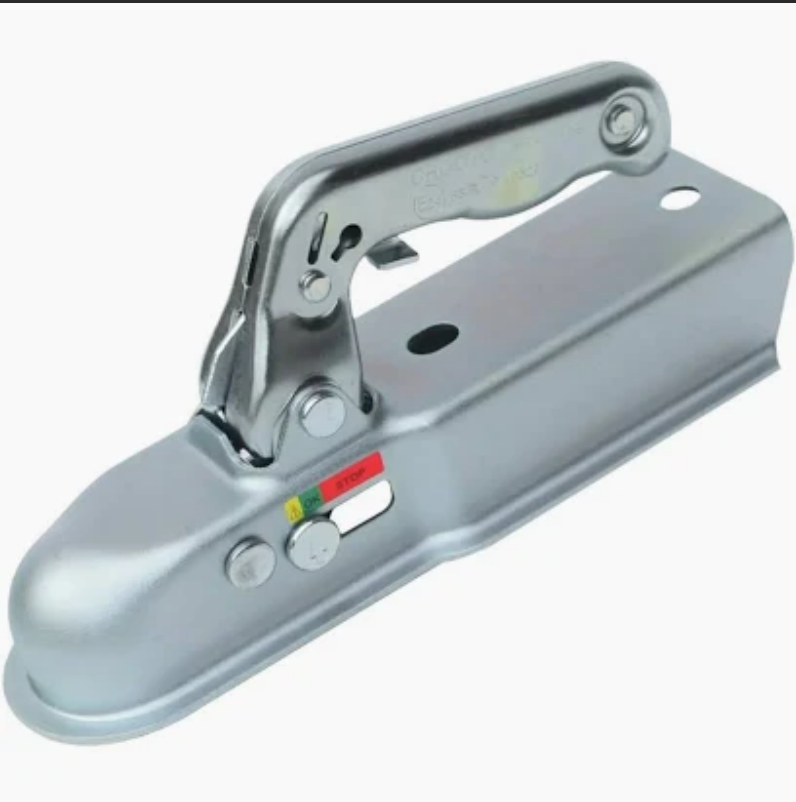
Product Overview
- Product Name: 50mm Heavy-Duty Trailer Coupler (European Standard)
- Material: 304 stainless steel / galvanized steel (corrosion-resistant options)
- Load Capacity: 2,000kg – 3,500kg (customizable for light/heavy-duty use)
- Key Function: Securely latches onto a 50mm tow ball, enabling safe articulation between the towing vehicle and trailer while preventing accidental disengagement.
Design & Engineering Features
The coupler’s design prioritizes safety, durability, and ease of use:
- Lever-Lock Mechanism: A spring-loaded lever ensures quick, tool-free latching/unlatching, with a secondary safety pin to prevent accidental release during transit.
- Corrosion Resistance: 304 stainless steel construction (or hot-dip galvanized coating) withstands harsh marine/road environments, extending service life by 3x compared to standard carbon steel.
- Load Distribution: Optimized housing geometry distributes tensile and shear loads evenly, meeting ISO 55000 and CE towing safety standards.
- Mounting Flexibility: Pre-drilled base plates compatible with standard trailer frame dimensions, reducing installation time for OEMs.
Manufacturing Process & Quality Control
Key Fabrication Steps
- Sheet Metal Cutting & Forming: Laser cutting and CNC bending create precision housing components (lever, base plate, latch assembly).
- Investment Casting: The main coupler body is cast to achieve complex load-bearing geometry, followed by CNC machining for tight tolerances.
- Assembly & Testing: Components are riveted/bolted together, with 100% functional testing (latch cycle, load pull test) to validate performance.
- Surface Finishing: Passivation (stainless steel) or powder coating (galvanized steel) for enhanced corrosion resistance.
Quality Assurance
- Compliance with ISO 9001 and CE EN 1640 safety standards
- Third-party load testing (up to 150% of rated capacity) to verify structural integrity
- Salt spray testing (1,000 hours) to validate corrosion resistance


